
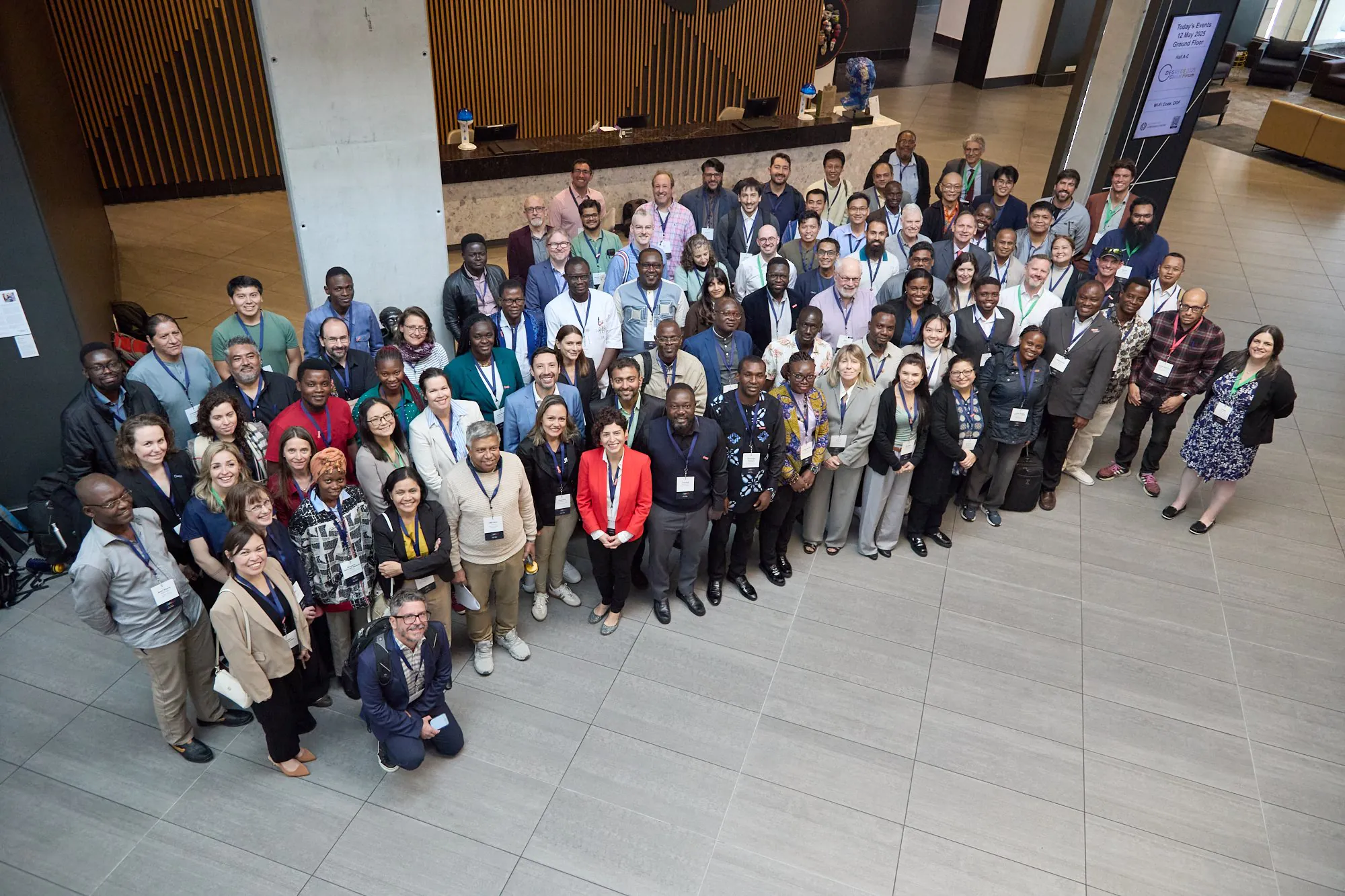
The papers, led by Global South experts across Asia, Africa, and Latin America, explore both the physical and social dimensions of how solar radiation modification (SRM) could affect their regions.

The Degrees Initiative began directly funding research in 2018, with the launch of the Degrees Modelling Fund. The fund provides grants to research teams in developing countries who want to model how the physical impacts of SRM could affect their local climate.
The first paper produced through the fund was published in 2020, becoming the first SRM study in Africa. It found that SRM would broadly reduce temperatures across the African continent in comparison to worst-case climate change scenarios, but that the impact on rainfall was more mixed.
This was quickly followed by the first SRM studies from a least developed country (LDC), from a country in the Middle East—North Africa region, from the Caribbean, and from Southeast Asia.
Dozens of new Modelling Fund teams have added to this list in the intervening five years, and this year they were joined by the first publications from our Socio-Political Fund, launched in 2024. Researchers with this funding work to better understand how the use of SRM relates to a range of topics, including economics, ethics, health justice, public perception and governance.
Reaching a milestone
Degrees-funded publications range from studies on the impact of climate change and SRM on individual river basins in Malaysia, to how brightening marine clouds in different ocean regions could impact climate across the African continent, and how an SRM stunt in Mexico prompted calls for governance discussions.
This year, the total number of papers published thanks to Degrees’ funding has topped 50. The honour of being the 50th paper is actually held jointly by two papers – both published on 1 August 2025 – one from a socio-political team from Mexico and one from a modelling team from Benin.
The Mexico team’s paper provides a new dataset designed to make it quicker and easier to model climate scenarios where SRM is used, compared to those where it is not. This could allow more scenarios to be created and shared to help governance decisions, such as what happens if one country decides to deploy SRM alone, or if SRM deployment suddenly stops.
The Benin team’s paper assesses the potential influence of SRM on sea-surface salinity (saltiness) in the eastern tropical Atlantic Ocean. Salinity is important for ocean current movements. It can be affected by changing rainfall and the resultant flow of freshwater from rivers, as well as processes within the ocean.
Climate change is predicted to increase rainfall, and so reduce salinity, in regions of the Atlantic fed by the Congo and Niger rivers. The team’s study suggests SRM could, on average, maintain salinity at current levels in both regions.
International influence
The number of papers published thanks to Degrees’ funding continues to rise as new teams come on board and teams that were first funded in 2018 expand their programmes. As well as contributing to global knowledge on SRM, these publications help establish their authors as experts in the field.
Degrees-funded researchers are increasingly shaping the global conversation on SRM. They have presented at high-level scientific meetings, authored influential reports, and advised national policymakers. The recently announced authors of the next major IPCC climate report included 14 Degrees-funded researchers, and a group of African researchers last month wrote a letter in Nature Climate Change calling for the continent to lead on SRM research and governance.
Degrees’ Founder and CEO Andy Parker said: “Reaching 50 published papers in peer-reviewed, international journals is a huge milestone. But what matters more is the growth of expertise in the Global South on SRM and how it may impact the issues that matter most to them. Our goal was to empower researchers to ask their own questions, and it’s enormously gratifying to see them being answered.”