Summary
This climate modelling study examined how marine cloud brightening (MCB) could affect Africa under a mid‑range warming scenario. Simulations show that deploying MCB in the Southeast Pacific produces the strongest cooling, reducing mean and extreme temperatures and precipitation, especially in West Africa. Deployments in the Northeast Pacific or Southeast Atlantic are less effective and leave some residual warming. MCB cools extreme high temperatures more effectively than extreme low temperatures.
Abstract
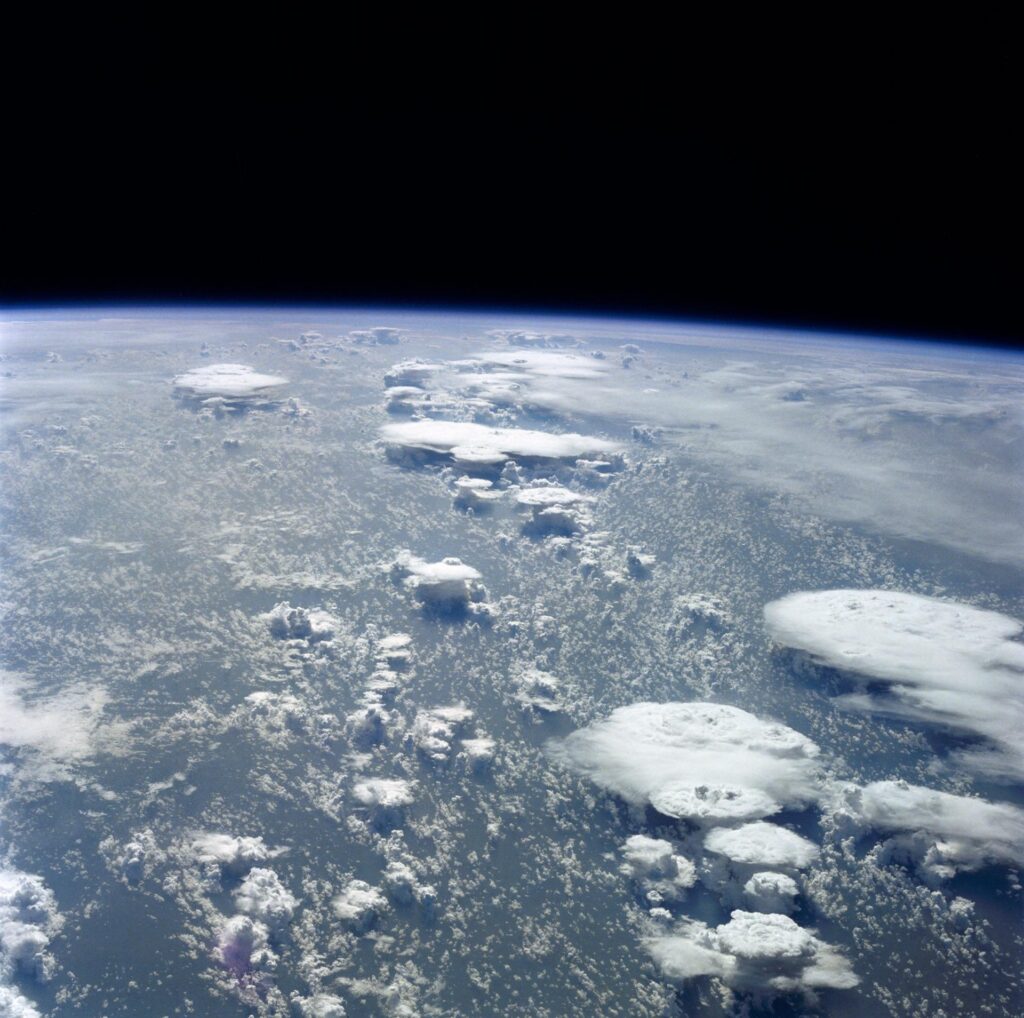
Solar climate intervention refers to a group of methods for reducing climate risks associated with anthropogenic warming by reflecting sunlight. Marine cloud brightening (MCB), one such approach, proposes to inject sea-salt aerosol into one or more regional marine boundary layer to increase marine cloud reflectivity. Here, we assess the potential influence of various MCB experiments on Africa’s climate using simulations from the Community Earth System Model (CESM2) with the Community Atmosphere Model (CAM6) as its atmospheric component. We analyzed four idealized MCB experiments under a medium-range background forcing scenario (SSP2-4.5), which brighten clouds over three subtropical ocean regions: (a) Northeast Pacific (MCBNEP); (b) Southeast Pacific (MCBSEP); (c) Southeast Atlantic (MCBSEA); and (d) these three regions simultaneously (MCBALL). Our results suggest that the climate impacts of MCB in Africa are highly sensitive to the deployment region. MCBSEP would produce the strongest global cooling effect and thus could be the most effective in decreasing temperatures, increasing precipitation, and reducing the intensity and frequency of temperature and precipitation extremes across most parts of Africa, especially West Africa, in the future (2035–2054) compared to the historical climate (1995–2014). MCB in other regions produces less cooling and wetting despite similar radiative forcings. While the projected changes under MCBALL are similar to those of MCBSEP, MCBNEP and MCBSEA could see more residual warming and induce a warmer future than under SSP2-4.5 in some regions across Africa. All MCB experiments are more effective in cooling maximum temperature and related extremes than minimum temperature and related extremes.
Plain language summary
We investigate the potential impact of artificially increasing marine cloud reflectivity on Africa’s climate. Human influence on the climate is projected to increase the risk of damaging extreme events across the globe. In Africa, one of the most vulnerable regions to climate change, these impacts are already being felt, especially among communities least able to adapt. It is possible to increase the reflectivity of marine clouds by spraying them with sea salt particulates. This approach was proposed as one possible way of reducing warming by reducing the amount of sunlight reaching the earth’s surface. The potential implications of such initiatives for the climate system remain uncertain, especially in Africa. In this study, we analyzed a climate model, that simulates increased reflectivity of clouds to assess the potential impacts of artificially brightening clouds over different subtropical marine regions on the African climate, focusing on mean and extreme precipitation and temperature events. Our results suggest that the impact of artificially increasing marine cloud reflectivity depends on the marine region of intervention.