Summary
A modelling study assessed how solar radiation modification (SRM) could influence future water availability in four major Central African basins. Under worst‑case climate change, water availability may drop by up to 60%, especially in the Cameroon Atlantic Basin. SRM would substantially reduce this deficit, in some cases limiting reductions to around 10% below pre‑industrial levels. Benefits are smaller under moderate climate scenarios, and further research is needed to understand risks and regional impacts.
Abstract
– A modelling study investigated the influence of solar radiation modification (SRM) on water availability in four major Central African river basins, compared to ‘worst-case’ and ‘middle-of-the-road’ climate-change scenarios.
– Under the worst-case scenario, water availability would decrease by up to 60% in the worst-affected area: the Cameroon Atlantic Basin.
– In the model, SRM would reduce this deficit so that water availability is only 10% less than preindustrial levels.
– Benefits were less clear when compared to a middle-of-the-road climate change scenario.
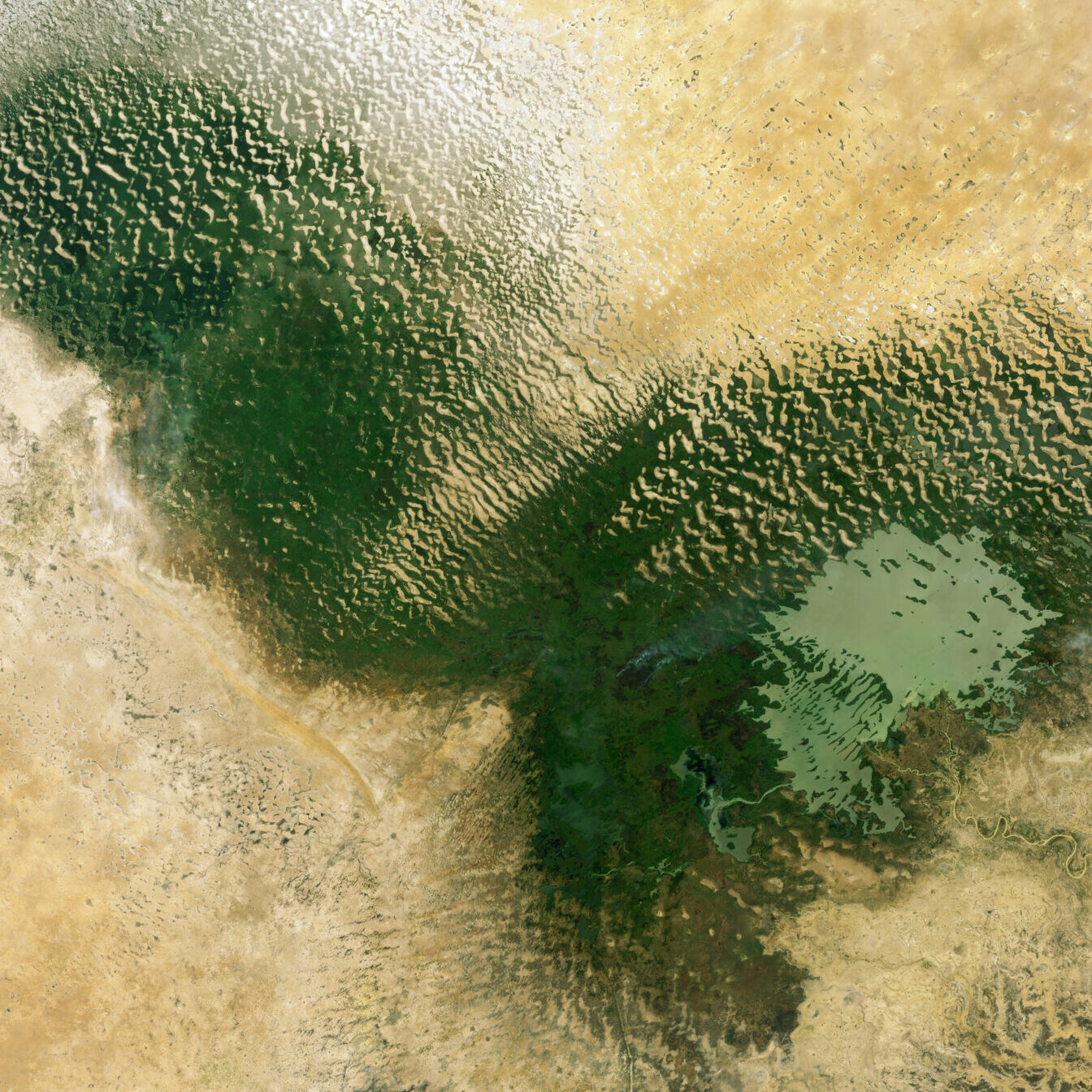
A Degrees-funded team, led by Dr Thierry C. Fotso-Nguemo from the National Institute of Cartography, Cameroon, has investigated how SRM could affect water availability across Central Africa. This included four river basins: Niger, Lake Chad, Cameroon Atlantic and Congo Basins.
Much of the economy in this region relies on rain-fed agriculture and hydropower, which would be severely impacted if natural water resources dried up.
Map of Africa, with four areas in the centre outlined
Areas in the study: Niger Basin (NB), Lake Chad Basin (LCB), Cameroon Atlantic Basin (CAB) and Congo Basin (CB)
The team used the latest climate models to compare four scenarios: unabated climate change (‘worst-case’, leading to up to 5°C warming by 2100), some mitigation of climate change (‘middle-of-the-road’, leading to around 3°C warming), and two scenarios that use SRM to reduce warming in line with the middle-of-the-road scenario.
The two SRM scenarios modelled were global solar dimming, where less of the Sun’s energy reaches the atmosphere (for example using structures in space to reflect sunlight), and stratospheric aerosol injection, where reflective particles are introduced into the upper atmosphere to similar effect.
Under each scenario, the ‘potential water availability index’ was calculated: the ratio between the amount of precipitation (the water input through rainfall) and the amount of potential evapotranspiration (the maximum possible removal of water back into the air, from hard surfaces or plants).
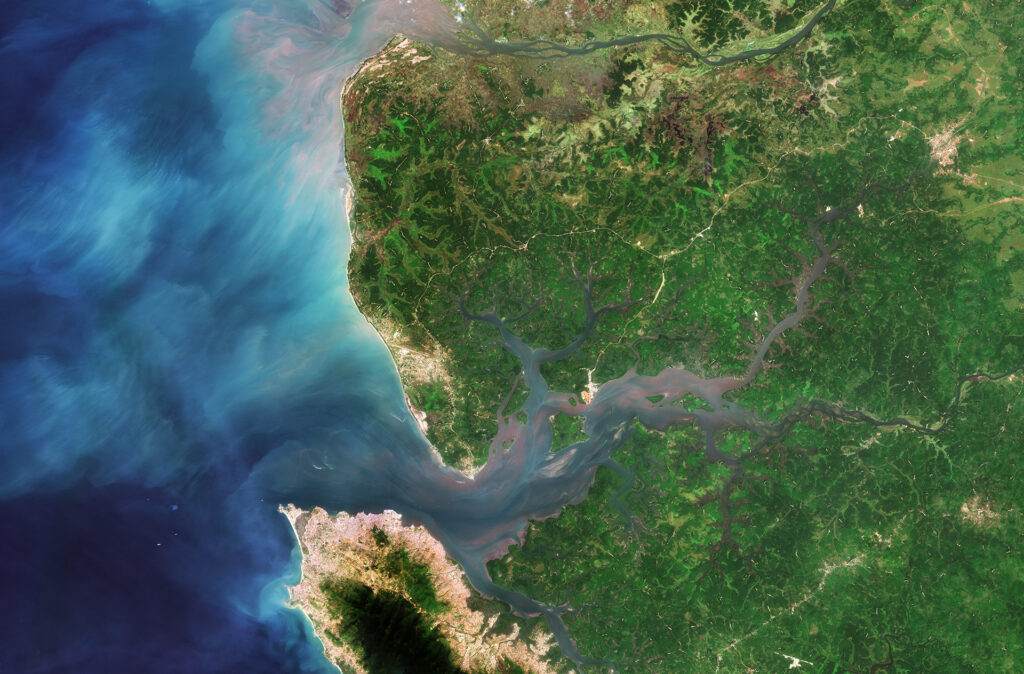
Under both climate change scenarios, the results varied for the basins across the near term (2021-2050), but all trended towards drying up in the longer term (2071-2100). The forested Cameroon Atlantic Basin, covering Cameroon, Gabon and Equatorial Guinea, suffered the most pronounced drying under the worst-case climate scenario, with potential water availability decreasing by up to 60%.
This was the extreme end of a general trend of more drying over forested basins in the study (compared to those basins including more desert). Thierry said: “This could potentially be alarming for the sustainable management of water resources, as it could have negative consequences for ecosystems and the populations that are dependent on them for their water supply.”
When the SRM was modelled, most water availability decreases were reduced compared to the climate change scenarios, but not fully returned to preindustrial values. Furthermore, the influence of SRM was less pronounced for the middle-of-the-road scenario compared to the worst-case scenario. The largest impact was on the Cameroon Atlantic Basin when using global solar dimming, reducing the water deficit so that it was only 10% less than preindustrial conditions, rather than 60%.
However, the team stresses that more research needs to be done into the other potential impacts of SRM. Thierry said: “Although the SRM may offer promising prospects for mitigating the water deficit risk over the main Central African river basins, it is important to consider the advantages and disadvantages of this technology as a whole before making an informed decision on its use.
“Further research, rigorous impact assessment and participatory decision-making are essential to ensure sustainable management of water resources and to minimise the undesirable side-effects of these techniques.”