
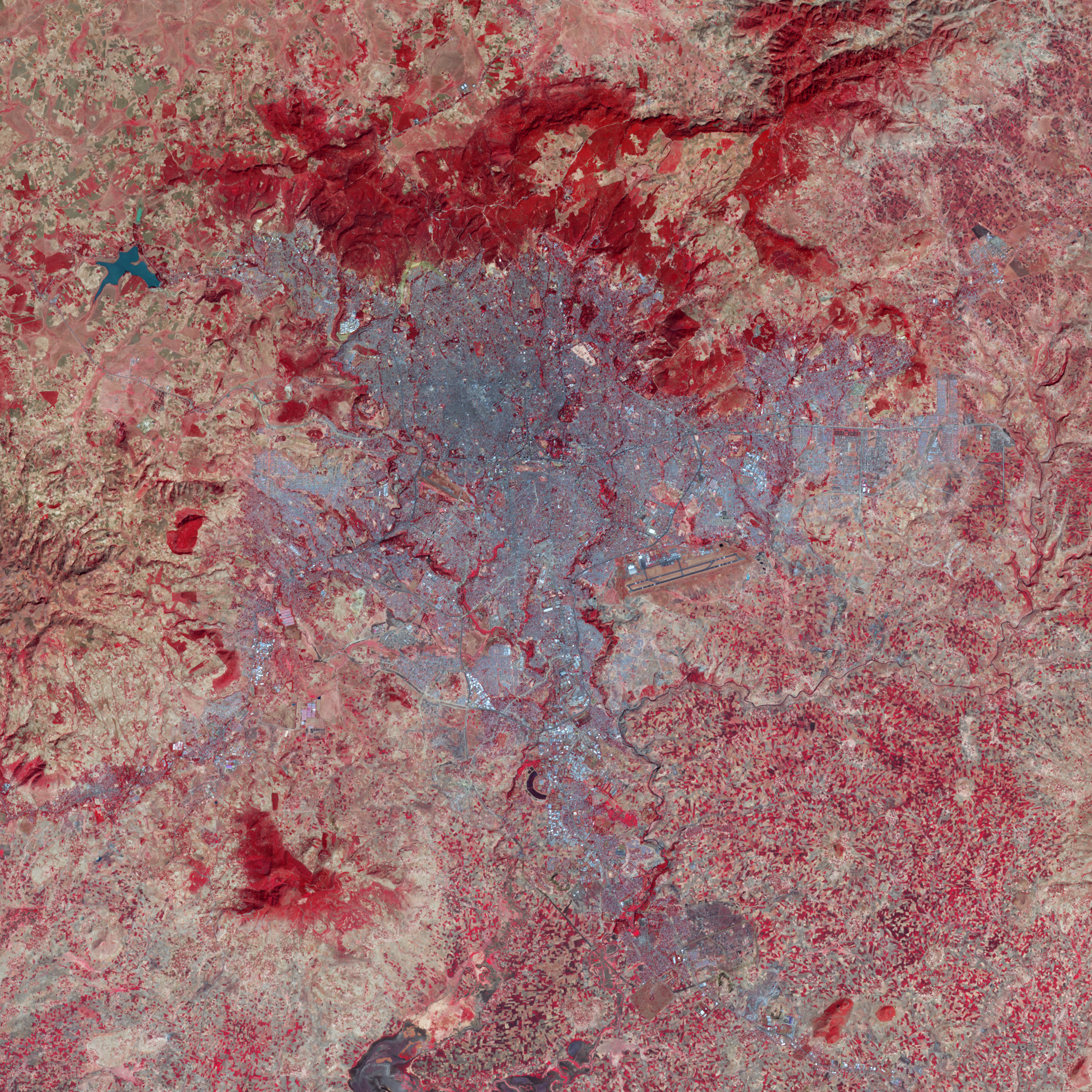
Continuing the series of meetings in Africa, SRMGI (the Degrees Initiative) and the African Academy of Sciences (AAS) held their third workshop in Addis Ababa, Ethiopia, in January 2013. It took place as a side event at the 24th Colloquium of African Geology (CAG24) and was chaired by Professor Berhanu Abegaz, Executive Director of the African Academy of Sciences.
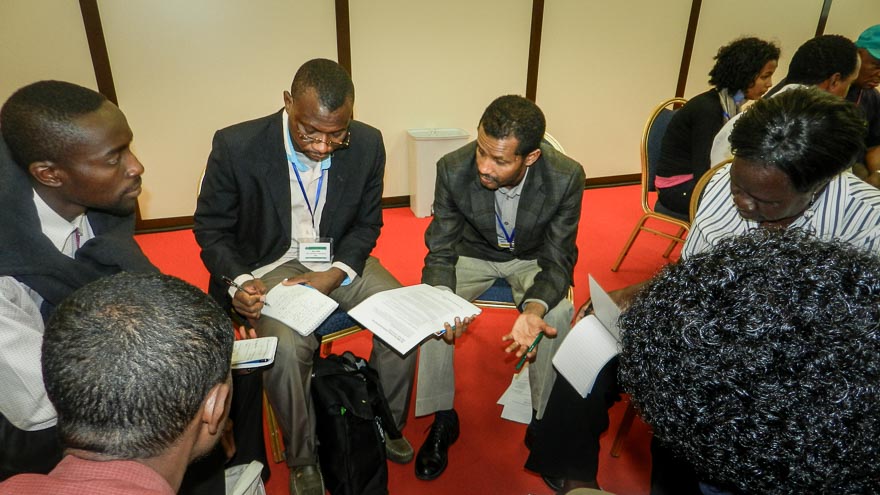
The half-day workshop focused on participant dialogue and emphasised small-group discussions and group exercises to address solar geoengineering research and governance. Participants built on our two previous African workshops by exploring possible governance arrangements for small-scale research into SRM and considering the role African scientists, NGOs, and policymakers could play in global geoengineering R&D.
The day began with introductions to SRM and climate change in Africa, highlighting that SRM technologies would be relatively cheap to deploy (compared to climate change mitigation), and would be expected cool the Earth quickly. However, the physical impacts of SRM are uncertain, could not be restricted by national boundaries, and the technology would likely cause unintended side effects. There are also numerous potential socio-political risks. In light of the potential benefits and drawbacks presented by SRM, the talk then highlighted the importance of good governance in any SRM development. It concluded by reviewing the different aspects of governance, and the governance challenges for the future.
The second half of the workshop featured breakout group exercises and concluded with an open plenary discussion, encouraging all participants to give their opinions of SRM, its research, and governance.
Participant suggestions included:
- The need for awareness-creation, sensitisation and capacity building on SRM around Africa. Capacity building should go beyond scientists: governments, civil society organisations and communities should all be involved.
- The establishment of a pan-African expert group, under the aegis of the African Academy of Sciences
- The need for increased capacity for SRM to be researched and taught in African universities.