A Degrees-funded team from Argentina analysed the response to an unauthorised small-scale deployment of solar geoengineering in Mexico in 2023, and recommend ways forward for governance across the Latin American and Caribbean region.
Lead author Dr María Inés Carabajal, from the University of Buenos Aires and the National Scientific and Technical Research Council (CONICET), Argentina, said the stunt exposed the governance void in the region. However, she also noted that the Latin American and Caribbean (LAC) region has a “unique opportunity to shape our own pathway” on solar geoengineering.

Solar geoengineering, also known as solar radiation modification (SRM), is a possible means to reduce the impacts of climate change by reflecting some sunlight back into space. Given the unknowns about its risks and benefits, the decision to use it or reject it could be one of the biggest decisions that humanity will face.
The interdisciplinary team behind the new paper recommend that in order to assess the risks and opportunities of SRM for themselves, countries in the LAC region should build research capacity and space for governance discussions.
The paper, published in the European Journal of Risk Regulation, is the first by a team funded by Degrees’ Socio-Political Fund, which is the first international SRM research programme aimed exclusively at social scientists in developing countries.
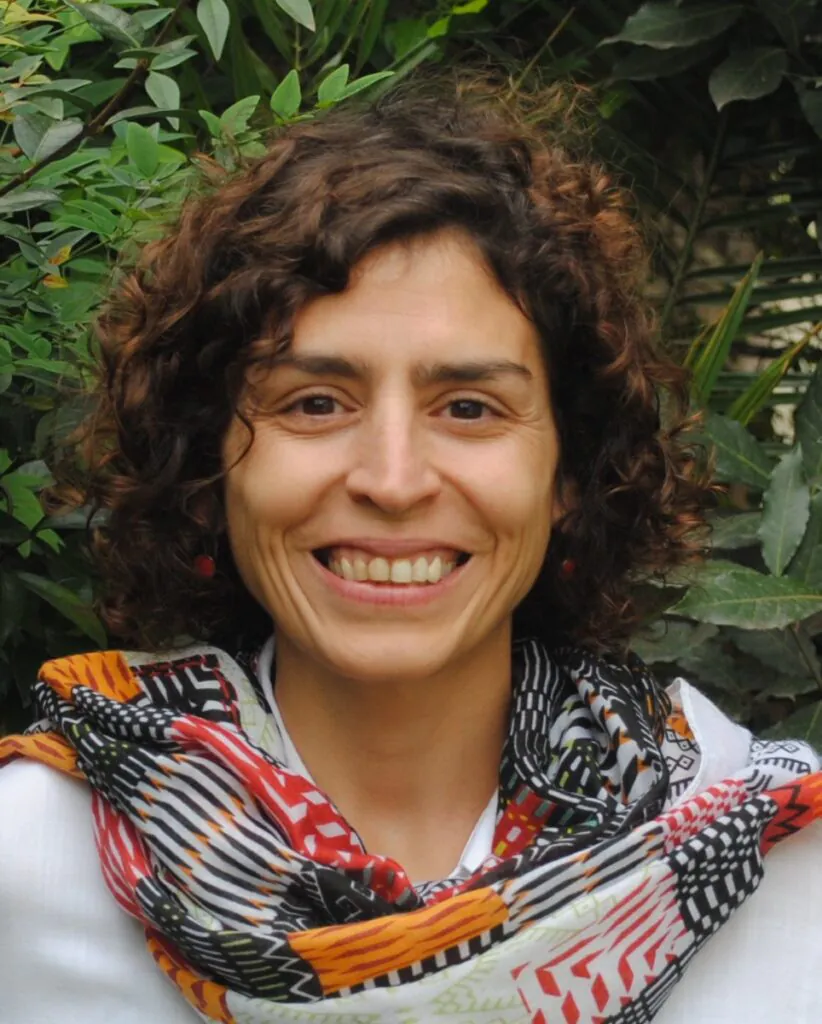
“With growing interest and support from international partners, we can build our own narratives, defining priorities that ensure future decisions reflect local values, needs, and vulnerabilities.”
Dr María Inés Carabajal
Degrees-funded researcher, Argentina
Defining an ‘experiment’
The study focused on the case of Make Sunsets, a US startup that in 2023 performed a small-scale deployment of SRM in Baja California, Mexico. The ‘experiment’ was not for research purposes and was performed without prior permission or community engagement.
Make Sunsets released two balloons of sulphur dioxide into the stratosphere, with the intention that the particles would reflect sunlight and produce a cooling effect. While their balloon deployments were too small to make any measurable difference to temperatures, the company sells such deployments as ‘cooling credits’.
The research team analysed the media and academic coverage of the deployment and its consequences, the most significant of which was the Mexican government’s announcement that it intended to ban SRM experimentation.
A key finding was that most coverage did not distinguish between ‘research’ experiments and ‘non-research’ experiments of SRM, and that the term ‘SRM experiment’ in public communications was often assumed to be irresponsible and unethical, and thus negative.
They found that this coverage had the effect of undermining legitimate scientific efforts, and could create barriers for rigorous transparent and participatory research experiments on SRM, further fuelling public scepticism and resistance.
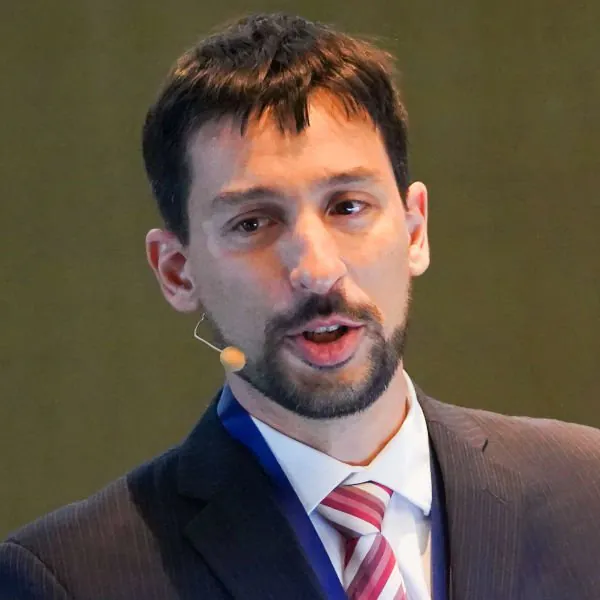
Co-author Dr Ignacio Mastroleo, from CONICET & Latin American Faculty of Social Sciences (FLACSO), Argentina, said: “One of the main risks of a case like Make Sunsets is that an irresponsible SRM non-research experiment can threaten the whole activity of responsible SRM research experiments. This is demonstrated by the Mexican government announcing the ban of undefined ‘SRM experiments’ that conflate research and non-research activities.
“We propose a definition of ‘SRM experiment’ that instead allows case-by-case evaluation and reasonable disagreement about whether any SRM research or non-research experiment is ethically responsible or not.”
María Inés added: “In the LAC region, SRM is still largely unfamiliar, so media portrayals of this kind of event significantly influence how the public understands the issue. It is important from an ethical and regulatory point of view to distinguish between research experiments aimed at producing generalisable knowledge or solving uncertainties, and other experimental activities which are not.
“This case illustrates how rogue actors can shape the SRM field in controversial ways, and underscores the need for governance to prevent irresponsible practices that could discredit legitimate research.”

Bringing LAC to global conversations
The team conclude that the absence of governance of SRM in the LAC region is a form of governance in itself – one that can leave countries unprepared and vulnerable to external agendas and outside actors.
They recommend national and regional policymakers create ‘governance spaces’ to discuss emerging climate technologies, including SRM.
Co-author Dr Florencia Luna, from CONICET and FLACSO, said: “Whether we like it or not, climate change impacts are already here, and as discussions around supplementary strategies like SRM gain momentum, the LAC region cannot afford to remain on the sidelines. We need to be part of the conversations.”
To inform these conversations, they also recommend governments support local research efforts, to build capacity and provide evidence on the potential risks and benefits of SRM for the region, such as how it could affect water supplies, health, and extreme weather events.
María Inés concludes: “It is crucial that our region participate more actively in the dialogue to avoid being left behind. Like many other technologies, SRM is advancing faster than regulatory systems can respond. However, SRM is still in early stages, so the region has a valuable opportunity to develop anticipatory governance.
“With growing interest and support from international partners, we can build our own narratives, defining priorities that ensure future decisions reflect local values, needs, and vulnerabilities.”
Strengthening ethical research
The Degrees Socio-Political Fund was launched in 2024 to complement the modelling funds made available by Degrees to physical science teams in the Global South since 2018. The Argentina team is composed of ethicists, anthropologists, philosophers, and climate scientists.
They plan to build on the work of this paper to further analyse discussions and public perceptions around SRM in the LAC region, and are planning a series of interviews with policymakers and climate experts.
Alongside these strands, they are also analysing the use of concepts and language in the field, building on analogies first used in bioethics, to establish principles such as what we mean why we talk about an SRM ‘experiment’ or ‘research’.
The Argentina team is also involved in two additional projects. One, funded by the World Health Organization (WHO) and led by Dr Florencia Luna, explores the potential health implications of SRM technologies. The other, focused on ethics and governance of SRM research, is supported by the UK Advanced Research and Innovation Agency (ARIA), led by Dr Ignacio Mastroleo, and hosted by the Inter-American Institute for Global Change Research (IAI).