

Degrees has launched an updated website and new branding to support our growing ambition.
With plans for larger research grants, dedicated data studies and more regional collaboration, we hope it will be easier than ever to follow our progress in making the SRM conversation more equitable.
Find research, publications and people
With improved navigation, the new site makes it easier for you to explore our work, discover research projects and their associated publications, and engage with the SRM research community across the Global South.
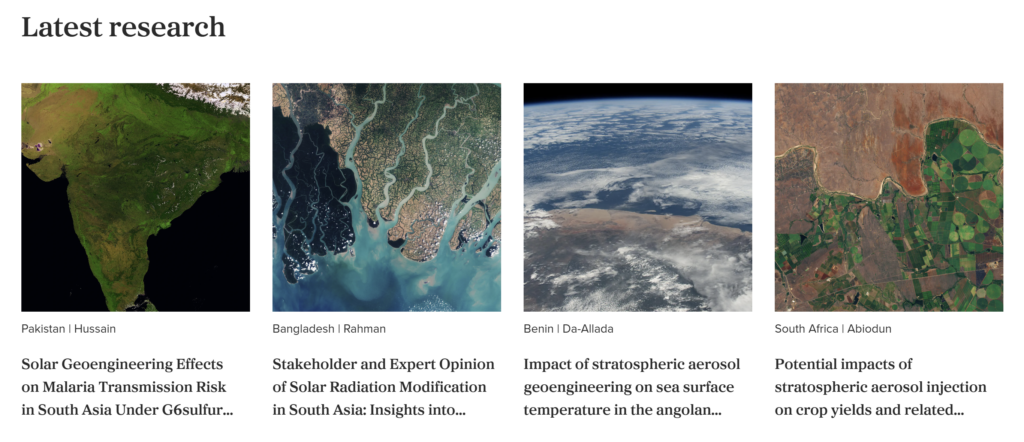
Each research paper now has its own page, so you can discover the latest results in detail, from the potential impact of stratospheric aerosol geoengineering on sea surface temperature in the Angolan upwelling system to stakeholder and expert opinions of solar radiation modification in South Asia. You can also filter publications by topic and region, to find out what the research says, for example, about agriculture in Africa or extreme weather in Asia.
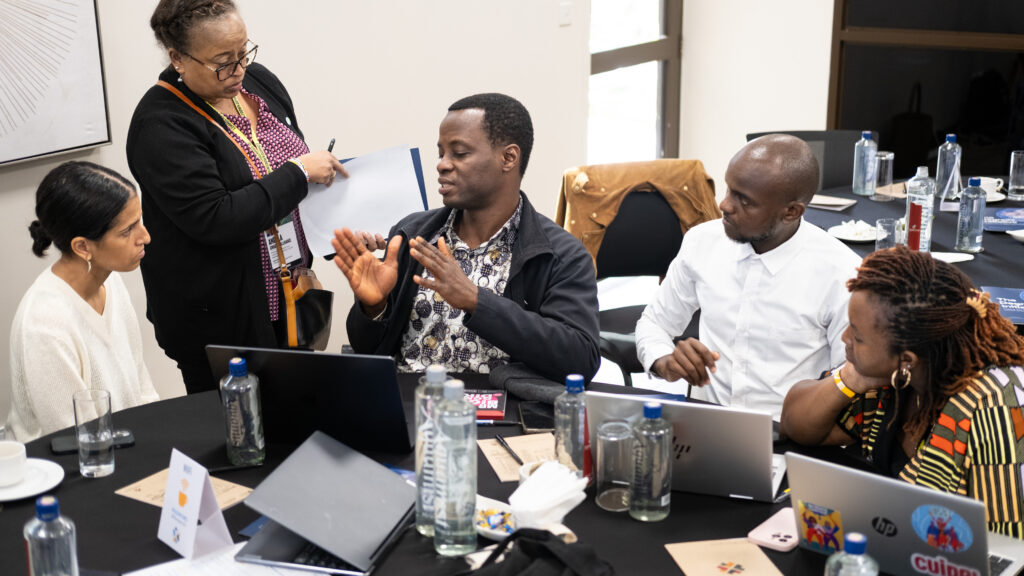
Our community continues to grow, and you can now search and filter our directory of researchers, as well as our dedicated group of volunteer experts and research collaborators. We are also bringing you more of the human stories from our community, from a deep dive into the impressive career of Dr Romaric C. Odoulami, to the experience of early-career researcher Trisha Patel at a crucial conference in the field.
More features and elements will be added to our site over the coming months. Let us know if there’s something you’d like to see.
A new visual identity
A new website is also a good chance to refresh the way we look. Our new logo design is based on a ball of daisies, which may seem an odd choice for a climate-focused NGO. But this image is at our roots.

The Degrees Initiative was born out of Founder and CEO Andy Parker’s work on a 2009 report on geoengineering for the UK’s Royal Society. That report had a ball of simplified daisies on the front, designed by Ginger Booth and based on the ‘Daisyworld’ model proposed by Dr James Lovelock and Prof. Andrew Watson in 1983.
Daisyworld is a simulated planet that is home to just two organisms: white daisies and black daisies. White daisies reflect more sunlight and cool the planet, causing more black daisies to grow. The balance of white and black daisies controls the planet’s temperature, and the thought experiment explores how reflectivity and feedback systems can affect a planet’s climate – central concepts in the study of SRM.
Founder and CEO of Degrees, Andy Parker, said: “The Daisyworld logo design is a full-circle moment: a reference to the project’s origins as we move to a new phase. Insights on planetary reflectivity are spreading around the world from the Global South, and we are going to keep this process moving: supporting research, building a global community, and connecting Southern experts into policy processes.”